
Trustworthy robots start with trustworthy data infrastructure.
PHAIN is building real-world data infrastructure for Physical AI,
Company
Headquarters
Changzhou
R&D Centers
Shanghai
Manufacturing
Changzhou
Team Size
30 people
PHAIN's team of about 30 people is focused on Physical AI data capture and processing.
Engineering and manufacturing share MCT Group's production base in Changzhou and its R&D network in Shanghai.
The team is lean,
The automotive-grade engineering methods aren't just talk.
The Group's autonomous driving systems are deployed in more than 1 million vehicles,
The Problem
What robots learn is often only part of the motion.
The human hand can perform complex,
For a robot to learn the same motion,
If position,
The hard part isn't capturing it once.
It's making that repeatable for every task.
This isn't just our own read
- Open X-Embodiment / RT-X: 22 robot types,
527 skills, over 160,000 task trajectories.
The study shows cross-robot training yields positive transfer.
(arXiv:2310.08864) - DROID: roughly 76,000 real-world trajectories,
about 350 hours.
(arXiv:2403.12945) - RH20T: over 110,000 contact-rich manipulation sequences spanning vision,
force, sound, motion, and human demonstration.
(arXiv:2307.00595) - Omdia 2026 forecast: roughly 13,000 humanoid robots shipped globally in 2025,
with annual shipments projected to reach about 2.6 million by 2035.
The industry is still early.
(Omdia,General-purpose Embodied Intelligent Robot 2026)
What We're Building
To help Physical AI learn from the real world faster.
To build trusted real-world data infrastructure for Physical AI.
What matters isn't how much data we capture. It's how much of it becomes data a model can actually learn from.
How PHAIN Works
PHAIN STACK
Three layers,
From capture hardware to the evolution loop,
PHAIN Studio
The end-to-end data pipeline,
For Sense
Standardized at capture
Time sync,
For Cognito
Structured data supply
Object labeling,
For Evolve
Amplified supply, feedback loop
Feeds standardized seed data to the Gen model,
Sense
Embodiment-free,
Purpose-built hardware captures the most complete human operation signal.
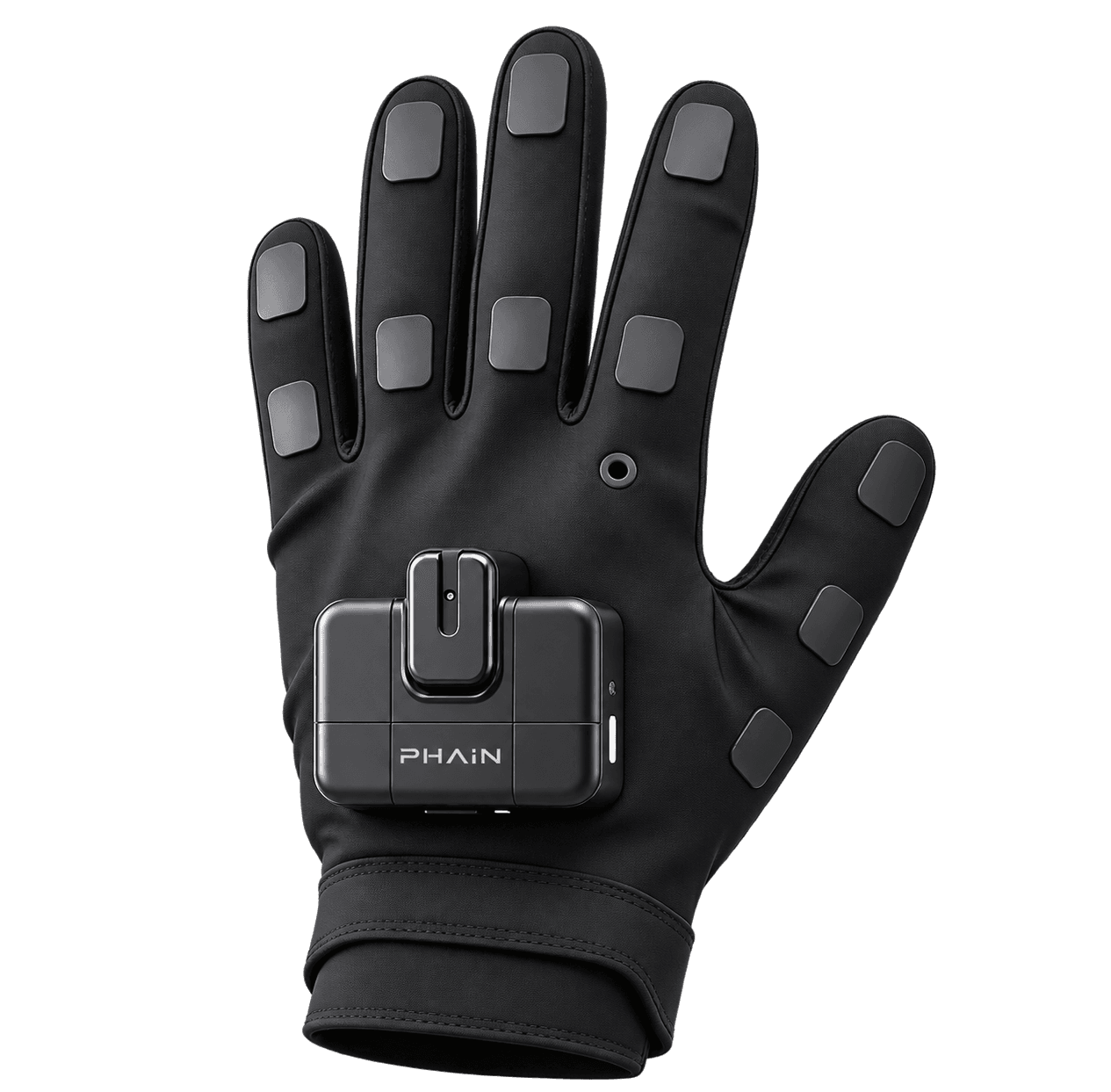
g03
Data glove ·
≤1mm
Fingertip precision (Pro series)
EMF and IMU dual-sensor fusion,
25 DoF
Degrees of freedom
Occlusion-robust
Continuous tracking
120Hz
Max frame rate
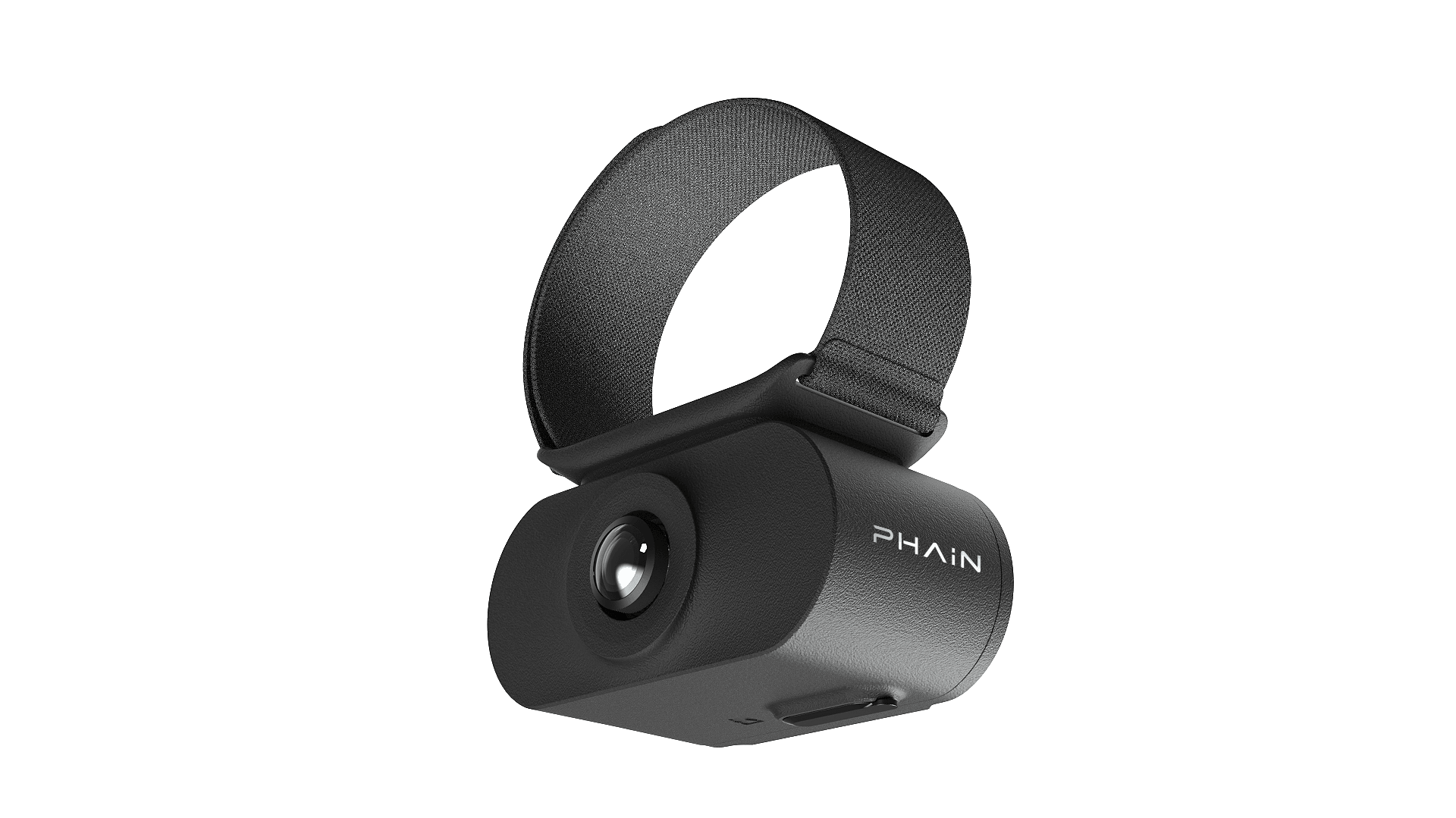
w03
Wrist camera ·
0.2–2m
Close-range distance
Fills in the hand-level detail a first-person view tends to miss,
H165°/V130°
Field of view
~70g
Total weight
<1ms
Sync accuracy
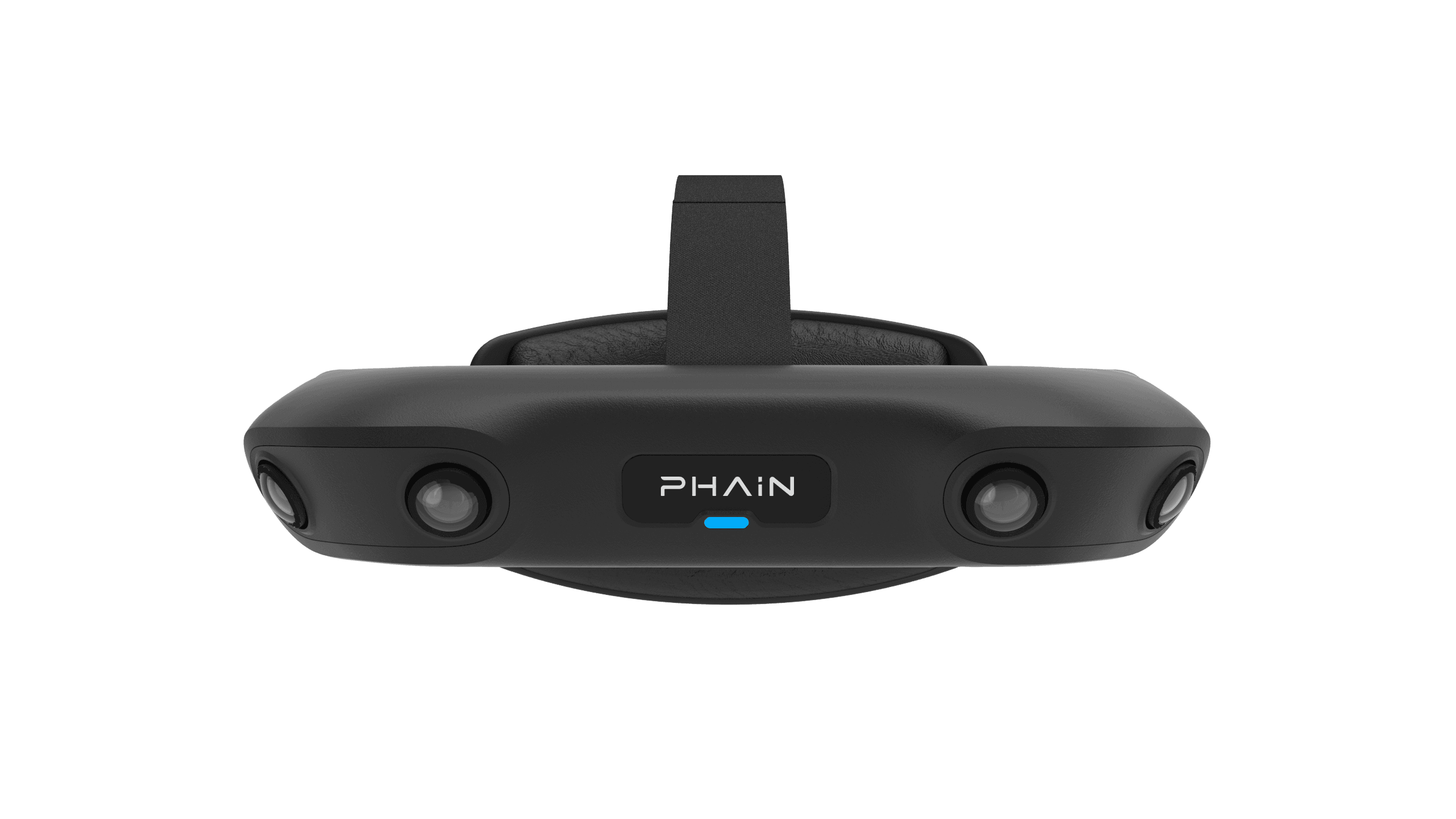
e03
First-person device ·
Embodiment-free
Lightweight first-person capture
Four fisheye lenses stitched together,
270°
Stitched FOV
<400g
Total weight
3h
Battery life
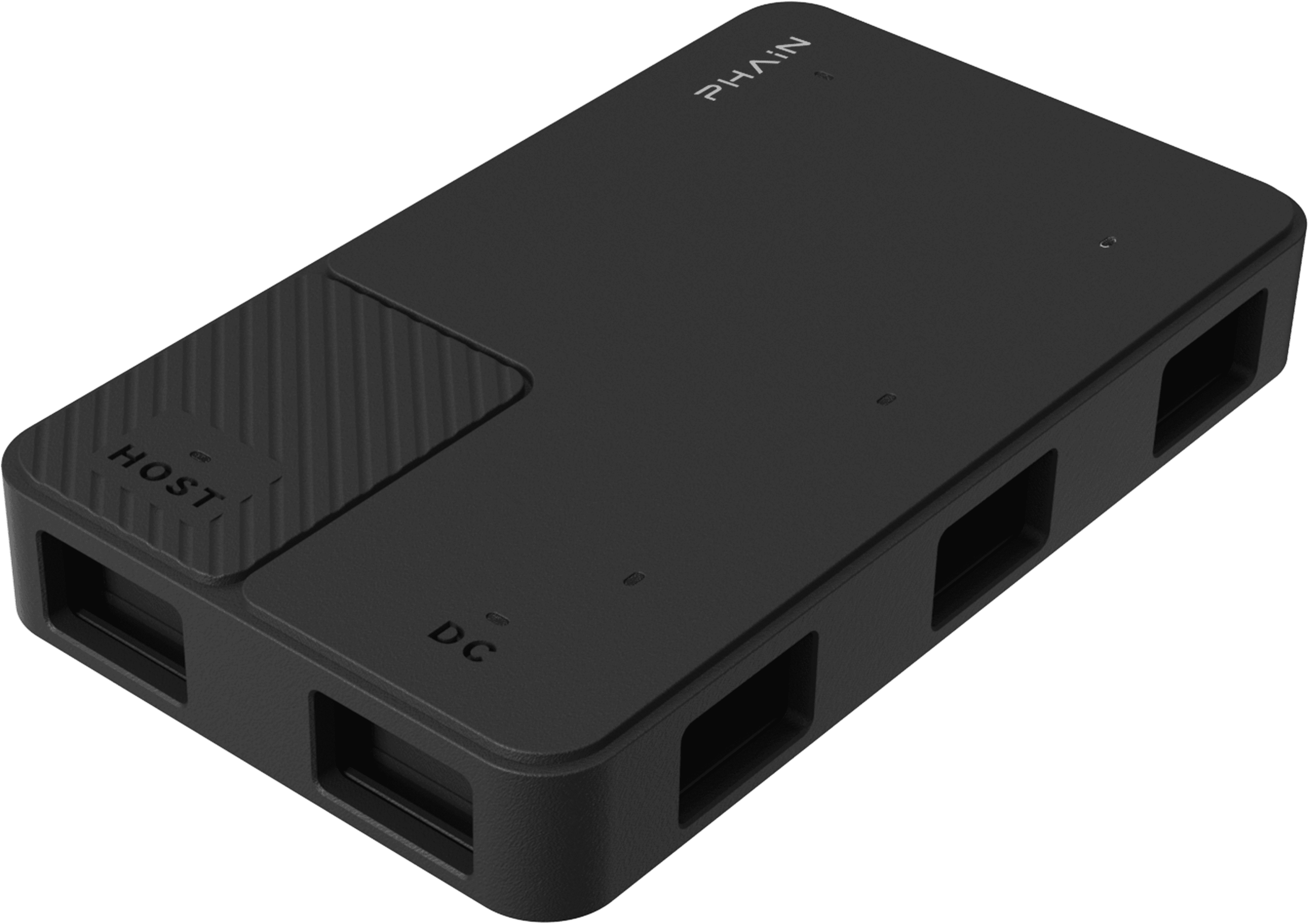
master
Multi-modal hub ·
<1μs
Trigger-channel deviation
The sync and power hub that puts G03,
<1ms
Overall sync accuracy
1–120Hz
Trigger frequency
~100g
Total weight
Cognito
Sub-millisecond alignment ·
The Fuse engine and Post cloud processing make sense of the structure behind those signals.

Fuse
Real-time ·
Sub-millisecond
Multi-modal alignment & fusion
Reassembles signals from the glove,
Post
Post-processing ·
Cloud High-Precision Solving
Re-solving offline data
Pushing the achievable precision ceiling for training-ready data further.
The Fuse engine and Post cloud processing are still what we're building toward. The figures above describe the direction, not metrics already delivered in the current version.
Evolve
Generation- and evaluation-driven data self-evolution
The Gen model amplifies data,
Gen
Generative model ·
100x
Real data amplification
Without diluting authenticity,
Eval
Evaluation model ·
Evaluation-Driven
Guides the next round of capture
Routes scoring results back into capture and generation,
The Gen model and Eval evaluation model are still what we're building toward. The figures above describe the direction, not metrics already delivered in the current version.
An end-to-end data pipeline connects cleaning and calibration,
Beyond that comes Mind-Train training,
Scene,
The two-way Real2Sim and Sim2Real loop is still the direction we're building toward, not yet a delivered, existing capability.
Why PHAIN
We started with the hardest data problem.
Start with the hardest problem
We started with the hardest data problem: contact-rich operations where contact,
If we can solve this,
≤1mm RMS
G03 fingertip position accuracy
A bridge from demonstration to learning
There's real work between how a human performs a task and what a robot can learn from it.
PHAIN turns that work into a product,
No figuring it out alone
Hardware,
Capture hardware,
What you get isn't a pile of separate tools.
It's a path that actually works.
A path that actually works
Assets that compound over time
Every engagement leaves behind reusable task templates and device profiles.
The second collaboration moves faster than the first.
Faster the second time
How to Start
Start by validating one task,
Validate one task
We use one of your real tasks to validate whether the data can be captured and is usable.
Scope is clear,
Collect in-house,
If you want your own team collecting data long-term,
Build a repeatable pipeline
We turn the validated method into a repeatable data production workflow inside your own organization.
Ongoing task-specific data
If you'd rather focus on model iteration,
Let's build this properly,
Whether you want to validate a task or join this early-stage team,